5 Bookkeeping Best Practices Every Small Business Should Follow
Running a small business means wearing a lot of hats. Between serving customers, managing employees, marketing your business, and handling day-to-day operations, bookkeeping can easily get pushed to the bottom of the list.
But good bookkeeping is about much more than recording transactions. Accurate and up-to-date books give you a clearer picture of how your business is performing, help you prepare for tax time, and provide the financial information you need to make informed business decisions.
Whether you’re just starting your business or trying to improve your current financial processes, these five bookkeeping best practices can help you stay organized and build a stronger financial foundation.
1. Keep Business and Personal Finances Separate
One of the most important things a small-business owner can do is keep business and personal finances separate.
Using a dedicated business checking account and credit card makes it much easier to identify business income and expenses. It also simplifies bookkeeping, bank reconciliation, financial reporting, and tax preparation.
When personal and business transactions are mixed together, determining which expenses actually belong to the business can become time-consuming and confusing.
Even if your business is small, treating its finances separately from your personal finances can make managing your books significantly easier.
2. Reconcile Your Bank and Credit Card Accounts Regularly
Bank reconciliation is the process of comparing the transactions recorded in your bookkeeping system with the transactions appearing on your bank and credit card statements.
Ideally, accounts should be reconciled every month.
Regular reconciliations can help identify duplicate transactions, missing expenses, incorrect amounts, outstanding transactions, and other discrepancies before they become larger problems.
It also helps ensure that the balances shown in your accounting records actually agree with your financial institutions.
If your accounts haven’t been reconciled in several months, don’t ignore them because you’re worried about what you might find. Getting caught up gives you a much better starting point for moving forward.
3. Categorize Transactions Correctly
Properly categorizing income and expenses is essential for meaningful financial reports.
For example, advertising expenses should generally be recorded separately from office supplies, utilities, professional services, and other types of business expenses.
Accurate categorization helps you understand where your money is going.
It also makes reports such as your Profit & Loss statement much more useful because you can see how much the business is spending in different areas.
Avoid automatically accepting every category suggested by accounting software without reviewing it. Automation can save time, but transactions should still be checked for accuracy.
4. Review Your Financial Reports
Financial reports aren’t just something you need at tax time.
Two reports small-business owners should become familiar with are the Profit & Loss Statement and Balance Sheet.
Your Profit & Loss Statement helps show your income, expenses, and profitability over a specific period.
Your Balance Sheet provides a snapshot of what the business owns, what it owes, and its equity at a particular point in time.
Reviewing these reports regularly can help you spot changes in revenue, increasing expenses, cash-flow concerns, and other trends that deserve your attention.
You don’t have to become an accountant to benefit from your financial reports. The goal is to understand enough about your numbers to ask questions and make informed decisions.
5. Don’t Wait Until Tax Time to Clean Up Your Books
One of the biggest bookkeeping mistakes a business owner can make is waiting until tax season to organize an entire year’s worth of financial activity.
By then, you may be trying to remember transactions that occurred many months ago, locate missing receipts, identify unknown expenses, and reconcile accounts while facing a deadline.
Maintaining your bookkeeping throughout the year makes the process far more manageable.
Monthly bookkeeping also gives you something even more valuable than easier tax preparation: current financial information about your business.
You shouldn’t have to wait until the end of the year to find out how your business is doing.
Consistency Makes the Difference
Good bookkeeping doesn’t have to consume hours of your time every week.
The key is consistency.
Keeping business and personal finances separate, reconciling accounts regularly, categorizing transactions correctly, reviewing financial reports, and maintaining your books throughout the year can prevent small bookkeeping problems from becoming much larger ones.
And if managing the books is taking too much time away from running your business, that’s where professional bookkeeping support can help.
Ready to Spend Less Time Worrying About Your Books?
Northeastern Oklahoma Bookkeeping LLC helps small-business owners stay organized and understand their financial information with reliable bookkeeping support.
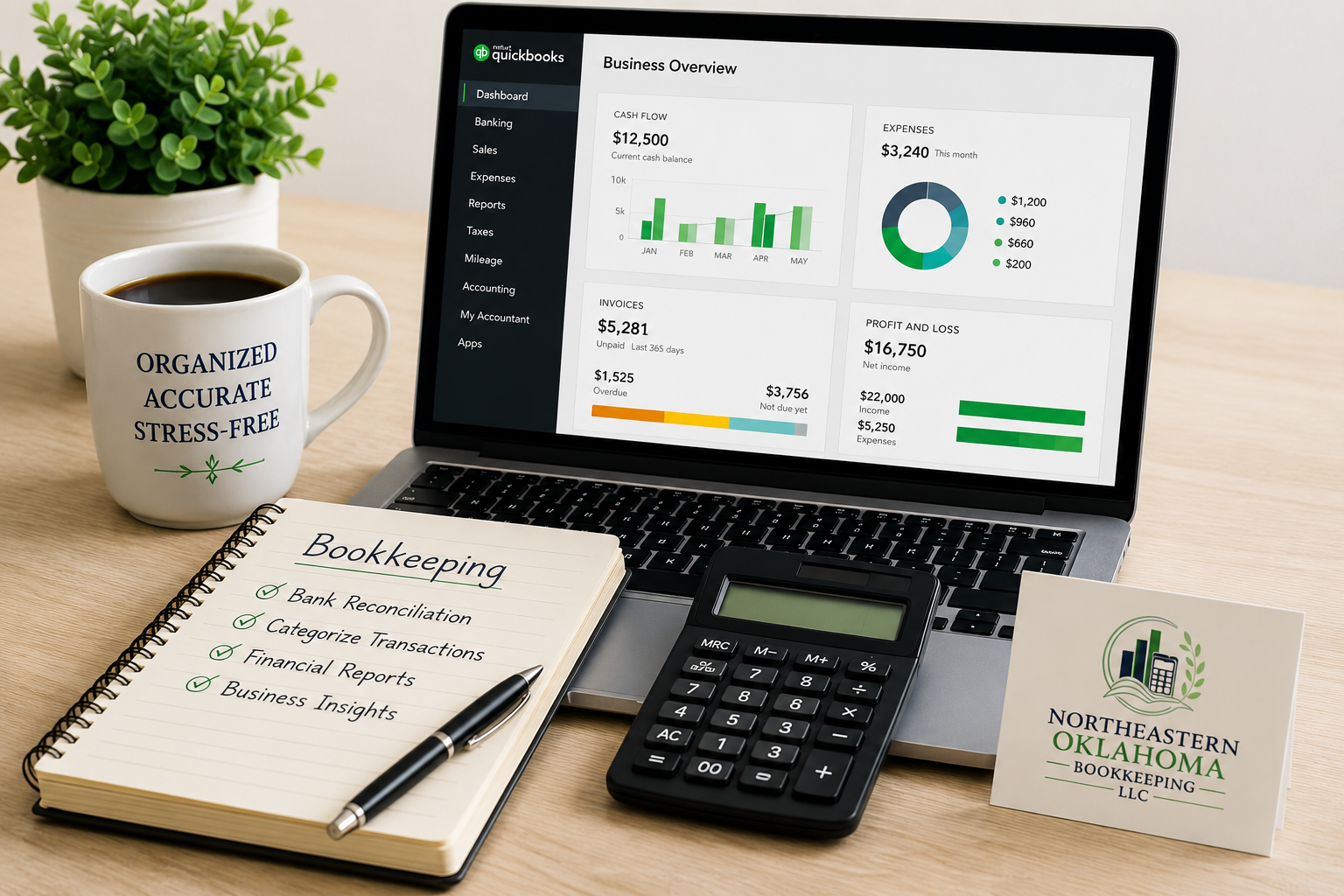
Services include monthly bookkeeping, catch-up bookkeeping, bank and credit card reconciliations, financial reporting, and QuickBooks Online support.
Schedule a free consultation to discuss your bookkeeping needs.